
Vidya Academy of Science & Technology
A unit of Vidya International Charitable Trust
Accredited by NAAC with "B++" grade
Civil Engineering
Phone / Email
04885287751
04885287752
cehod@vidyaacademy.ac.in
ABOUT US
DEPARTMENT OF CIVIL ENGINEERING
Explore the Department of Civil Engineering at VAST — where Infrastructure, Industry, and Instruction meet
Civil Engineering is an all-pervasive profession, full of opportunities and challenges, addressing every aspect of the infrastructure that modern living depends on — buildings, transportation systems, water supply and wastewater treatment, and environmental protection. It plays, quite literally, the role of nation building. The ongoing construction boom in India and abroad continues to open vast opportunities for civil engineers, and VAST is committed to molding its students into world-class engineers ready to meet that demand.
Since its establishment in 2006, the Department of Civil Engineering has made steady, manifold progress across teaching, research, and industry engagement — building a legacy that continues to grow. The department offers a four-year B.Tech programme with an intake of 60 students, along with a two-year M.Tech programme for 12 students. There is also provision for lateral entries into the third semester for diploma holders. Backed by a full-fledged infrastructure, the department houses well-equipped UG laboratories, a computer centre, smart classrooms, and tutorial halls. The Civil Engineering Association further enriches student life, nurturing technical and extracurricular engagement beyond the regular curriculum.

Vision of the Department
To excel in Civil Engineering education and research, moulding innovative and socially responsible professionals for sustainable development.
Mission of the Department
M1: Provide quality education in Civil Engineering that imparts technical knowledge and develops problem-solving skills.
M2: Promote research, innovation and entrepreneurship that contribute to sustainable infrastructure and societal development.
M3: Develop professionally competent Civil Engineers with ethical values, leadership qualities and commitment for societal well-being.
HOD

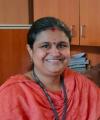
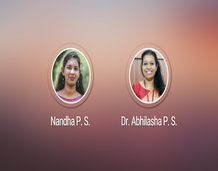
Dr Abhilasha P. S.
M.Tech, Ph.D
Professor & HoD
04885287751 Ext : 200
Previous Experience :-
-
With over 21 years of academic experience and 2 years in the civil engineering industry, Dr Abhilasha P. S. brings a unique blend of practical insight and scholarly excellence to the Civil Engineering Department. As the Professor and Head of the Department, she plays a pivotal role in steering the department towards academic distinction and industry relevance.
Areas of Interest :-
- Geosynthetics, Geotechnical Engineering, Dam Safety, Structural Engineering, Indian Knowledge System, ISO 9001:2015.
- Reviewer of International Conferences
- Advisory board member of National Conference
- Consultancy works related with Slope protection and other Civil Engineering Area
- QUALITY MANAGEMENT SYSTEM Lead Auditor, Certified by Bureau Veritas Chennai.
- Principal Investigator for KTU CERD funded Research Project "Application of geotextiles as filter in embankment dams".
- Winner of RASHTRAPATI GUIDE Award.
- Journals
b. National-5
- Conferences
b. National-2
- MISSION 10 X team has uploaded the Two Sessions prepared namely
b. Compass Survey, in the Mission 10 x portal.
Membership in Professional Bodies
- Indian Society for Technical Education
- Institution of Engineers India
- Indian Science Congress
PEOPLE










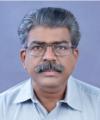
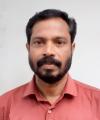
Mr. Sudhakaran T.T
Trade Instructor
I T I
04885287751 Ext : 145,721



PEO, PSO, WK, PO, SDG
Program Educational Objectives (PEOs)
- PEO1: Graduates will be able to apply knowledge of Civil Engineering principles, analytical skills, and modern engineering tools to provide innovative solutions for complex engineering problems.
- PEO2: Graduates will be able to excel in professional careers and higher studies by demonstrating technical competence, research aptitude, leadership qualities, and effective communication skills.
- PEO3: Graduates will be able to contribute to sustainable infrastructure development through innovation, entrepreneurship, and application of emerging technologies in Civil Engineering.
- PEO4: Graduates will be able to practice Civil Engineering with professional ethics, social responsibility, and a commitment to lifelong learning to address evolving societal and environmental challenges.
Program Specific Outcomes (PSOs)
- PSO1: Analyze and design structural systems, geotechnical foundations, and infrastructure components using modern design codes and engineering software, ensuring structural safety and sustainability.
- PSO2: Plan and execute construction and infrastructure projects using digital construction technologies, surveying and GIS tools, and project management practices for timely, cost-effective, and quality outcomes.
- PSO3: Innovate in emerging areas such as green building technologies, sustainable water resource management, and smart infrastructure systems to address societal needs.
Knowledge and Attitude Profile (WK)
- WK1: A systematic, theory-based understanding of the natural sciences applicable to the discipline and awareness of relevant social sciences.
- WK2: Conceptually-based mathematics, numerical analysis, data analysis, statistics and formal aspects of computer and information science to support detailed analysis and modelling applicable to the discipline.
- WK3: A systematic, theory-based formulation of engineering fundamentals required in the engineering discipline.
- WK4: Engineering specialist knowledge that provides theoretical frameworks and bodies of knowledge for the accepted practice areas in the engineering discipline; much is at the forefront of the discipline.
- WK5: Knowledge, including efficient resource use, environmental impacts, whole- life cost, re-use of resources, net zero carbon, and similar concepts, that supports engineering design and operations in a practice area.
- WK6: Knowledge of engineering practice (technology) in the practice areas in the engineering discipline.
- WK7: Knowledge of the role of engineering in society and identified issues in engineering practice in the discipline, such as the professional responsibility of an engineer to public safety and sustainable development.
- WK8: Engagement with selected knowledge in the current research literature of the discipline, awareness of the power of critical thinking and creative approaches to evaluate emerging issues.
- WK9: Ethics, inclusive behavior and conduct. Knowledge of professional ethics, responsibilities, and norms of engineering practice. Awareness of the need for diversity by reason of ethnicity, gender, age, physical ability etc. with mutual understanding and respect, and of inclusive attitudes.
Program Outcomes (POs)
- PO1: Engineering Knowledge: Apply knowledge of mathematics, naturalscience, computing, engineering fundamentals and an engineering specializationas specified in WK1 to WK4 respectively to develop to the solution of complexengineering problems.
- PO2: Problem Analysis: Identify, formulate, review research literature and analyze complex engineering problems reaching substantiated conclusions with consideration for sustainable development. (WK1 to WK4)
- PO3: Design/Development of Solutions: Design creative solutions for complex engineering problems and design/develop systems/components/processes to meet identified needs with consideration for the public health and safety, whole-lifecost, net zero carbon, culture, society and environment as required. (WK5)
- PO4: Conduct Investigations of Complex Problems: Conduct investigations of complex engineering problems using research-based knowledge including design of experiments, modelling, analysis & interpretation of data to provide valid conclusions. (WK8).
- PO5: Engineering Tool Usage: Create, select and apply appropriate techniques, resources and modern engineering & IT tools, including prediction and modelling recognizing their limitations to solve complex engineering problems.(WK2 and WK6)
- PO6: The Engineer and The World: Analyze and evaluate societal and environmental aspects while solving complex engineering problems for its impact on sustainability with reference to economy, health, safety, legal framework, culture and environment. (WK1, WK5, and WK7).
- PO7: Ethics: Apply ethical principles and commit to professional ethics, human values, diversity and inclusion; adhere to national & international laws. (WK9)
- PO8: Individual and Collaborative Team work: Function effectively as an individual, and as a member or leader in diverse/multi-disciplinary teams.
- PO9: Communication: Communicate effectively and inclusively within the engineering community and society at large, such as being able to comprehend and write effective reports and design documentation, make effective presentations considering cultural, language, and learning differences
- PO10: Project Management and Finance: Apply knowledge and understanding of engineering management principles and economic decision- making and apply these to one’s own work, as a member and leader in a team,and to manage projects and in multidisciplinary environments.
- PO11: Life-Long Learning: Recognize the need for, and have the preparation and ability for independent and life-long learning adaptability to new and emerging technologies and critical thinking in the broadest context of technological change. (WK8)
Sustainable Development Goals (SDGs)
- SDG 1 - No Poverty: End poverty in all its forms everywhere
- SDG 2 - Zero Hunger: End hunger, achieve food security and improved nutrition and promote sustainable agriculture.
- SDG 3 - Good Health and Well-being: Ensure healthy lives and promote well-being for all at all ages.
- SDG 4 - Quality Education: Ensure inclusive and equitable quality education andpromote lifelong learning opportunities for all.
- SDG 5 - Gender Equality: Achieve gender equality and empower all women andgirls.
- SDG 6 - Clean Water and Sanitation: Ensure availability and sustainablemanagement of water and sanitation for all.
- SDG 7 - Affordable and Clean Energy: Ensure access to affordable, reliable,sustainable and modern energy for all.
- SDG 8 - Decent Work and Economic Growth: Promote sustained, inclusive andsustainable economic growth, full and productive employment and decentwork for all.
- SDG 9 - Industry, Innovation and Infrastructure: Build resilient infrastructure,promote inclusive and sustainable industrialization and foster innovation.
- SDG 10 - Reduced Inequalities: Reduce inequality within and among countries.
- SDG 11 - Sustainable Cities and Communities: Make cities and human settlementsinclusive, safe, resilient and sustainable.
- SDG 12 - Responsible Consumption and Production: Ensure sustainableconsumption and production patterns.
- SDG 13 - Climate Action: Take urgent action to combat climate change and itsimpacts.
- SDG 14 - Life Below Water: Conserve and sustainably use the oceans, seas andmarine resources for sustainable development.
- SDG 15 - Life on Land: Protect, restore and promote sustainable use of terrestrialecosystems, sustainably manage forests, combat desertification, and halt and reverse land degradation and halt biodiversity loss.
- SDG 16 - Peace, Justice and Strong Institutions: Promote peaceful and inclusive societies for sustainable development, provide access to justice for all and build effective, accountable and inclusive institutions at all levels.
- SDG 17 - Partnerships for the Goals: Strengthen the means of implementation and revitalize the global partnership for sustainable development.
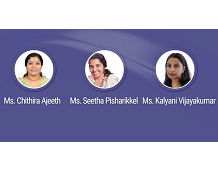
FACULTY
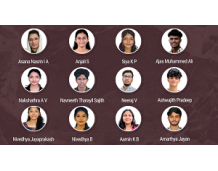
STUDENTS LIST
PLACEMENT

MAJOR RECRUITERS :
- Aarbee Structures Pvt. Ltd.
- Acero Structural Engineers
- Al Nasr Contracting LLC
- 7th Designs
- Cab Associates
- Creative Designs
- Dome Designs
- Federal Bank
- GM Associates
- Green Interio Fusion
- Paradigm IT Pvt. Ltd.
- Prime Roofing Infrastructure
- Spiral / Spiral Overseas Services
- Sutherland
- Talrop
- Tata Consultancy Services (TCS)
INFRASTRUCTURE
LABORATORY FACILITIES
The department is equipped with well-established, adequately resourced laboratories that effectively support the program-specific curriculum. These facilities are maintained by qualified and experienced technical staff who play a vital role in enriching and innovating the teaching–learning process. In alignment with curriculum and syllabus requirements, the faculty member in charge, together with the technical staff of each practical course, prepares the list of experiments, laboratory manuals, and related instructional materials, ensuring enhanced student learning, hands-on exposure, and improved practical performance.
1. Surveying Laboratory (Location/Room Number: NB-011)
This laboratory is intended to conduct a foundational practical course in Land Surveying for Civil Engineering students and is offered in the third semester as per the curriculum. The laboratory provides facilities for carrying out surveying exercises and field-based surveying practices. In addition to academic requirements, the laboratory has also the capability to undertake land and field surveying as consultancy services.

Surveying Laboratory Practice
2. Material Testing Laboratory (Location/Room Number: CL-0-002)
The testing and inspection of basic building materials such as cement, aggregates, concrete, and steel are essential components of quality construction. This laboratory is intended to carry out various tests to evaluate their properties. The laboratory equipment is used to assess the quality of building materials, including the plastic and hardened properties of concrete, the mechanical and elastic properties of metals, and the quality of reinforcing bars. This laboratory provides testing services for concrete cubes and steel reinforcing bars using specialized equipment such as Universal Testing Machine to evaluate their strength and mechanical properties, thereby supporting the safety and durability of structures. The laboratory is also equipped to offer consultancy and testing services to State Government and private organizations.

Material Testing Laboratory
3. Geotechnical Engineering Laboratory (Location/Room Number: NB-0-010)
The geotechnical engineering laboratory helps in determining the engineering behavior of soils. Different physical, index and engineering properties can be determined in the laboratory that are required for classifying the geomaterials. The lab is also extensively utilized for consultancy services to State Government and private organizations. Experiments conducted in the laboratory include tests for the assessment of index and engineering properties of soil such as cohesion, friction, CBR percent, consistency limits, free swell index, maximum dry density and OMC, field density, specific gravity, natural moisture content etc.

Geotechnical Engineering Laboratory
4. Computer Applications Laboratory (Location/Room Number: SB-0-011)
The objective of this laboratory is to introduce various CADD software, software used for structural analysis and design, and software used for planning and management. The laboratory enables students to gain hands-on experience with these tools, thereby enhancing their ability to apply computer-based techniques in real-world civil engineering projects.

Computer Applications Laboratory
5. Environmental Engineering Laboratory (Location/Room Number: NB-0-006)
The Environmental Engineering laboratory provides students with practical exposure to testing water, and wastewater samples. Through experiments and analysis, students learn pollution monitoring techniques and sustainable solutions, enhancing their understanding of environmental challenges and preparing them for careers in environmental engineering and management. Experiments for the assessment of water quality parameters such as alkalinity, acidity, hardness, chloride, iron, dissolved oxygen, BOD, COD, sulphates, sulphides, pH, total solids, electrical conductivity, turbidity can be conducted in this laboratory. The laboratory also offers testing, assessment, and consultancy services related to water quality analysis.

Environmental Engineering Laboratory
6. Transportation Engineering Laboratory (Location/Room Number: NB-0-010A)
This laboratory facilitates testing of bituminous binders and bituminous mixes used in the top layers of flexible pavements, aggregates used in various pavement component layers, and soils used for subgrade and embankment works. The laboratory equipment is also utilized for consultancy activities such as evaluating the quality of materials used in pavement construction and carrying out pavement mix design.

Transportation Engineering Laboratory
7. Civil Engineering Workshop (Location/Room Number: CL 0-001)
The civil engineering workshop offers students hands-on exposure to the skills related to the civil engineering domain in the first year of engineering studies. The course is included in semester I of the current curriculum and is offered to students of both civil engineering and mechanical engineering branches. The workshop provides practical experience through exercises such as field area measurement, setting out, plumbing, brick masonry and levelling practices, helping students develop essential skills in surveying and basic civil engineering applications.

Civil Engineering Workshop
8. Structural Engineering Laboraory/Research Laboratory
Research Laboratory is an advanced facility dedicated to score stream structural engineering where, the experimental study of structural behavior, material performance, and innovative construction techniques is performed. It provides a controlled environment for conducting load tests, analyzing structural responses, and validating theoretical and numerical models.
9. Project Laboratory
A digital repository of previous prototype models, simulation outputs, and working model demonstrations with detailed technical documentation is maintained for reference and knowledge transfer. Students extensively utilize Virtual Laboratory platforms hosted by premier institutes such as IITs for performing advanced experimental simulations, strengthening conceptual understanding, and validating analytical results.
DEPARTMENT LIBRARY
Department maintains a library which records more than 700 volumes of books. Department faculty members and students utilize this facility for a quick reference and knowledge improvement.
SYLLABUS
- KTU 2024 Syllabus
ACTIVITIES
CONSULTANCY
Department of Civil Engineering, VAST is a State Government empanelled consultancy agency. The major clients are NHAI, LSGD,KWA, KPWD. Many consultancy work from Private organizations are also undertaken by the department.

GALLERY:

DEPT PUBLICATIONS
Department Technical Magazine
Department News Letter
TAKE A SURVEY
- Alumni Feedback survey - Click Here
- Students Exit survey- Click Here
- Parent Exit Feedback survey- Click Here
- Employer Feedback survey- Click Here
Achievements
-
 Placement at RDC Concrete Mix for 2022-26 batch studentPlacement at RDC Concrete Mix for 2022-26 batch student
 -
 CE Students Completed SWAYAM Plus courseSWAYAM Plus course completion by S2 Civil Engineering Students
 -
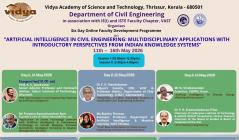
 CE faculty members successfully complete FDPCE faculty members successfully complete FDP on “Emerging Trends in GIS and Artificial Intelligence for Civil Engineering”
 -
 Paper Presentation at SECON'26CE student and faculty member present paper at the International Conference on Structural Engineering and Construction Management (SECON)
 -
 Paper Presentation at SECON'26CE HoD and student elevate institutional research with paper presentation at SECON’26
 -
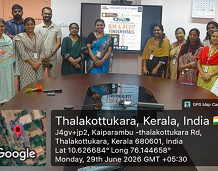
-
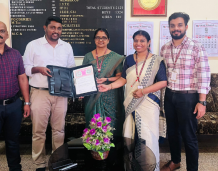 MoU between CE Dept and TANGENT, ThrissurMemorandum of Understanding (MoU) between CE Dept and TANGENT, Thrissur
 -
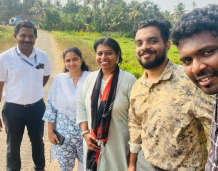 Consultancy on Traffic Studies and Road DesignConsultancy on Traffic Studies and Road Design by the Civil Engineering Department
 -
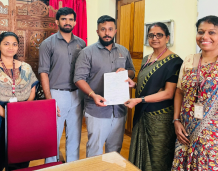 MoU between CED, VAST and PIE Builders and DevelopersMemorandum of Understanding (MoU) between Vidya Academy of Science and Technology and PIE Builders and Developers, Thrissur
 -
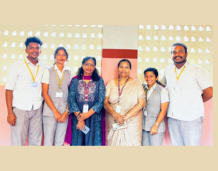 APJAKTU CERD Research Seed Money Scheme FundingBig round of applause to CE faculty members and students on being selected for APJAKTU CERD Research Seed Money Scheme Funding
 -
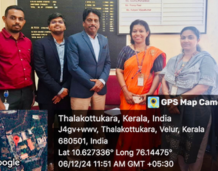
-
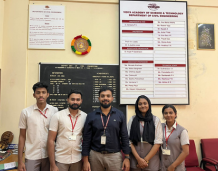 Published paper in International JournalCE Faculty Member and Vidya students publish paper in International Journal
 -
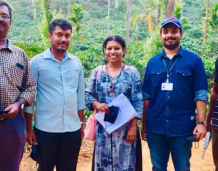 CE Dept gets more involved in Rebuild Kerala InitiativeGovernment of Kerala established the Rebuild Kerala Initiative (RKI) to bring about a perceptible change in the lives and livelihoods of...
 -
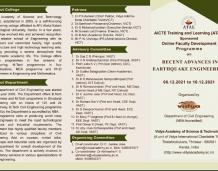 CE Dept gets grant from ATAL AcademyCE Dept gets grant from ATAL Academy for five-day FDP on earthquake engineering
 -
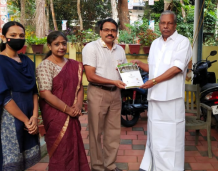 CE HoD hands over DPR to Hon'ble MinisterCE HoD hands over DPR for rejuvenation of Karuvannur River to Hon'ble Minister Shri A C Moideen
 -
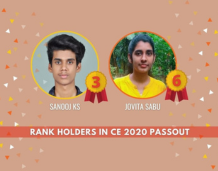 Third and sixth ranks in UniversityThird and sixth ranks in University : Proud moment for CE Dept
 -
-
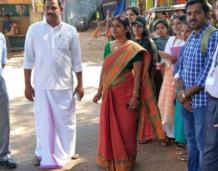 LSGD SURVEY: Adds glory to CE DeptVidya participates in Rebuild Kerala Initiaitve : Adds glory to CE Dept
WHAT'S NEW
Information
Address
Vidya Academy of Science & Technology
Thalakottukara P.O., Kecheri, Thrissur - 680501, Kerala, India
Phone: +91 4885 287751, 287752
Fax: +91 4885 288366
E-Mail: principal@vidyaacademy.ac.in
VICT | Vidya Kilimanoor | IT Division
locate us

Affiliated to APJ Abdul Kalam Technological University & Approved by AICTE | ISO 9001 : 2015
Copyright © 2025, www.vidyaacademy.ac.in. All Rights Reserved.