
Vidya Academy of Science & Technology
A unit of Vidya International Charitable Trust
Accredited by NAAC with "B++" grade
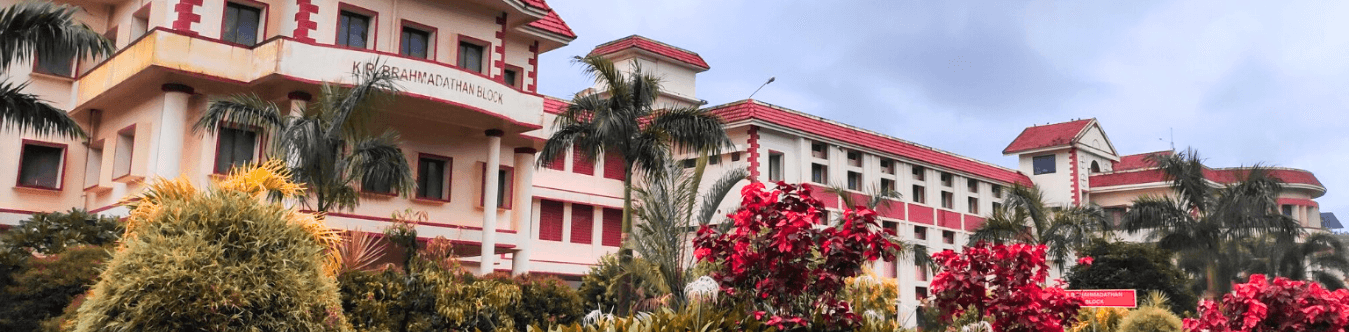
Artificial Intelligence & Machine Learning

Phone / Email
04885287751
04885287752
aimlhod@vidyaacademy.ac.in
About
Artificial Intelligence and Machine Learning (AI & ML) is an emerging area which expands its boundaries to a variety of fields. AI & ML has now proven high impact in different sectors like healthcare, security, entertainment, education, autonomous transportation, intelligent robots, space exploration, speech processing, stock trading and many more. The department of Artificial Intelligence and Machine Learning (AIML) is established with a vision to emerge as a premier center for education and research in Artificial Intelligence and Machine Learning. The department currently offers a 4 year B.Tech programme in the engineering stream under the affiliation of KTU. The current intake to this programme is 60. This programme covers the fundamentals of computer science courses along with industry oriented courses pertaining to AI and ML. This course is best suited for students seeking to build expertise in Artificial Intelligence and Machine Learning and emerging technologies.
Career opportunities in Artificial Intelligence and Machine Learning are Data Scientist, Machine Learning Engineer, Research Scientist, Business Intelligence Developer, Product Manager, Robotics Scientist and many more. The faculty members are highly motivated and devoted in delivering the highest quality professional education to students, and strive to excel in their research areas. Our initiatives will definitely mould the students in such a way that they face the external world with prompt technical, interpersonal and problem-solving skills.
VISION
To be a center of excellence in artificial intelligence and machine learning education, research, and innovation, nurturing competent professionals capable of developing intelligent, ethical, and sustainable solutions for societal and industrial advancement.
MISSION
M1: Provide quality education in artificial intelligence and machine learning through effective teaching-learning practices, enabling students to acquire strong technical knowledge, analytical skills, and problem-solving abilities.
M2: Promote research, innovation, entrepreneurship, and interdisciplinary collaboration in emerging AI technologies to address industrial and societal challenges.
M3: Develop professionally competent graduates with ethical values, leadership qualities, lifelong learning abilities, and a commitment to societal well-being in a technology-driven world.
HOD

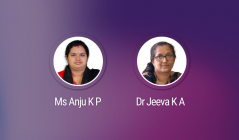
Dr. Jeeva K A
M.Tech, Ph.D
Professor & HOD
Ext : 149
Previous Experience :- 18 years of Teaching
Areas of Interest :- Secure signal processing, Cryptography, Image processing
PEOPLE


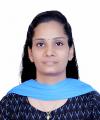





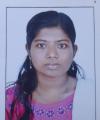
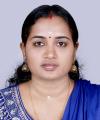
PEOs, POs & PSOs
Knowledge and Attitude Profile (WK)
WK1: A systematic, theory-based understanding of the natural sciences applicable to the discipline and awareness of relevant social sciences.
WK2: Conceptually-based mathematics, numerical analysis, data analysis, statistics and formal aspects of computer and information science to support detailed analysis and modelling applicable to the discipline.
WK3: A systematic, theory-based formulation of engineering fundamentals required in the engineering discipline.
WK4: Engineering specialist knowledge that provides theoretical frameworks and bodies of knowledge for the accepted practice areas in the engineering discipline; much is at the forefront of the discipline.
WK5: Knowledge, including efficient resource use, environmental impacts, whole-life cost, re-use of resources, net zero carbon, and similar concepts,that supports engineering design and operations in a practice area.
WK6: Knowledge of engineering practice (technology) in the practice areas in the engineering discipline.
WK7: Knowledge of the role of engineering in society and identified issues in engineering practice in the discipline, such as the professional responsibility of an engineer to public safety and sustainable development.
WK8: Engagement with selected knowledge in the current research literature of the discipline, awareness of the power of critical thinking and creative approaches to evaluate emerging issues.
WK9: Ethics, inclusive behavior and conduct. Knowledge of professional ethics, responsibilities, and norms of engineering practice. Awareness of the need for diversity by reason of ethinicity, gender, age, physical ability etc. with mutual understanding and respect, and of inclusive attitudes.
PEOs
PEO1: Graduates will demonstrate strong foundations in basic sciences, mathematics, computing, and Artificial Intelligence to develop analytical thinking, solve complex problems, and pursue successful careers in AI and related domains.
PEO2: Graduates will pursue research, higher education, innovation, and entrepreneurial ventures by applying emerging AI technologies to solve industrial and societal challenges.
PEO3: Graduates will demonstrate professional ethics, leadership, effective communication, teamwork, and lifelong learning to adapt to technological advancements and contribute responsibly to society.
PSOs
PSO1 Apply the principles of Computer Science, Mathematics, Artificial Intelligence, and Machine Learning to analyse, design and develop software systems for solving complex engineering problems.
PSO2 Analyse structured and unstructured data using statistical, data analytics, Artificial Intelligence, and Machine Learning techniques to develop ethical solutions for real-world applications.
PSO3 Integrate Artificial Intelligence, Machine Learning, and modern computing technologies with software engineering principles to develop AI based solutions through multidisciplinary approach.
Program Outcomes (POs)
The graduates of Artificial Intelligence & Machine Learning will be able to:
01. Engineering knowledge: Apply the knowledge of mathematics, science, engineering fundamentals and Artificial Intelligence and Machine Learning specialization to the solution of complex engineering problems.
02. Problem analysis: Identity, formulate, review research literature, and analyze complex engineering problems reaching substantiated conclusions using first principles of mathematics, natural sciences, and engineering sciences.
03. Design/development of solutions: Design solutions for complex engineering problems, design system components or processes that meet the specified needs with appropriate consideration for public health and safety, cultural, societal and environmental considerations.
04. Conduct investigations of complex problems: Use research-based knowledge and research methods including design of experiments, analysis and interpretation of data, and synthesis of the information to provide valid conclusions.
PO5: Engineering Tool Usage: Create, select and apply appropriate techniques, resources and modern engineering & IT tools, including prediction and modelling recognizing their limitations to solve complex engineering problems. (WK2 and WK6)
PO6: The Engineer and The World: Analyze and evaluate societal and environmental aspects while solving complex engineering problems for its impact on sustainability with reference to economy, health, safety, legal framework, culture and environment. (WK1, WK5, and WK7).
PO7: Ethics: Apply ethical principles and commit to professional ethics, human values, diversity and inclusion; adhere to national & international laws. (WK9)
PO8: Individual and Collaborative Team work: Function effectively as an individual, and as a member or leader in diverse/multi-disciplinary teams.
PO9: Communication: Communicate effectively and inclusively within the engineering community and society at large, such as being able to comprehend and write effective reports and design documentation, make effective presentations considering cultural, language, and learning differences
PO10: Project Management and Finance: Apply knowledge and understanding of engineering management principles and economic decision-making and apply these to one’s own work, as a member and leader in a team, and to manage projects and in multidisciplinary environments.
PO11: Life-Long Learning: Recognize the need for, and have the preparation and ability for i) independent and life-long learning ii) adaptability to new and emerging technologies and iii) critical thinking in the broadest context of technological change. (WK8)
Sustainable Development Goals (SDGs)
SDG 1 - No Poverty: End poverty in all its forms everywhere.
SDG 2 - Zero Hunger: End hunger, achieve food security and improved nutrition and promote sustainable agriculture.
SDG 3 - Good Health and Well-being: Ensure healthy lives and promote well-being for all at all ages.
SDG 4 - Quality Education: Ensure inclusive and equitable quality education and promote lifelong learning opportunities for all.
SDG 5 - Gender Equality: Achieve gender equality and empower all women and girls.
SDG 6 - Clean Water and Sanitation: Ensure availability and sustainable management of water and sanitation for all.
SDG 7 - Affordable and Clean Energy: Ensure access to affordable, reliable, sustainable and modern energy for all.
SDG 8 - Decent Work and Economic Growth: Promote sustained, inclusive and sustainable economic growth, full and productive employment and decent work for all.
SDG 9 - Industry, Innovation and Infrastructure: Build resilient infrastructure, promote inclusive and sustainable industrialization and foster innovation.
SDG 10 - Reduced Inequalities: Reduce inequality within and among countries.
SDG 11 - Sustainable Cities and Communities: Make cities and human settlements inclusive, safe, resilient and sustainable.
SDG 12 - Responsible Consumption and Production: Ensure sustainable consumption and production patterns.
SDG 13 - Climate Action : Take urgent action to combat climate change and its impacts.
SDG 14 - Life Below Water : Conserve and sustainably use the oceans, seas and marine resources for sustainable development.
SDG 15 - Life on Land : Protect, restore and promote sustainable use of terrestrial ecosystems, sustainably manage forests, combat desertification, and halt and reverse land degradation and halt biodiversity loss.
SDG 16 - Peace, Justice and Strong Institutions: Promote peaceful and inclusive societies for sustainable development, provide access to justice for all and build effective, accountable and inclusive institutions at all levels.
SDG 17 - Partnerships for the Goals: Strengthen the means of implementation and revitalize the global partnership for sustainable development.
COs
ACTIVITIES
AY 2026-27
- AIML Association Day 2026 celeAIML Association Day 2026 celebrates talent, technology and student spiritbrates talent, technology and student spirit
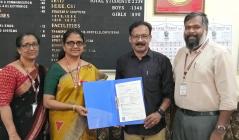
- AIML faculty member attends Faculty Industry Connect Program – NeST Digital Academy
- Vidya outshines competitors with first, second and multiple top-10 ranks in the Healthcare Digital Innovation Contest 2026
- Vidya came alive with the colours of ONAM 2026,blending intricate floral art, folk performances and high-stakes campus games
- AIML students reach academic milestone with NPTEL Certification in Machine Learning
- AIML students earn NPTEL certification in Python for Data Science
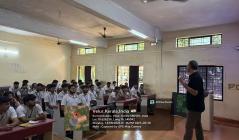
- AIML Dept organizes Industry Interaction
- NPTEL Certification Milestone by AIML students
- AIML students earn NPTEL Certification in Python for Data Science
- AIML Dept organizes Smart Spark Workshop – Smart Electronics and IoT
- AIML faculty members and students present research paper on AI-powered cardiology assistant at ICACA 2026
- Vidya students achieve academic excellence with 9+ SGPA in S4 exams
- Vidya’s elite performers secure 9+ SGPA in S2 university examinations
- AIML students and faculty members present innovative research at the International Conference on Interdisciplinary Perspectives of Emerging Trends in Computing (ICIPETC-26)
- Vidya top performers secure 9+ SGPA in S6 University Examinations
AY 2025-26
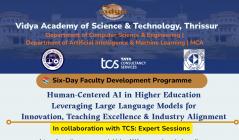
- Vidya conducts FDP on “Human-Centered AI in Higher Education: Leveraging Large Language Models for Innovation, Teaching Excellence & Industry Alignment”
- VAST and IISH Sign MoU to Advance AI-Driven Heritage Research
- Academic achievement unfolds in KTU S8 B.Tech Results
- Vidya student achieves prestigious Google Gemini Campus Ambassador recognition
- AIML Faculty members successfully complete the NPTEL certification course
- AIML faculty members complete NPTEL certification course
- AIML faculty member attends FDP titled “AI in Healthcare: Data, Analytics, Ethics & Real-World Applications”
- Placement at TCS for 2022-26 batch students
- Congratulations to EY GDS Full Stack training Certified 2023-27 batch B. Tech students
- NPTEL course completion : Python for Data Science by AIML Students
- AIML students successfully complete the NPTEL course ‘Python for Data Science
- Placement at White Matrix Software Solutions for 2026 graduating batch
- Vidya presents International Conference on Intelligent Systems & Sustainable Technologies (ICISST) 2026 – A Global platform for intelligent and sustainable technologies
- AIML faculty members and students present research paper at the International Conference on Smart Electrical Systems and Sustainable Technologies 2026
- MPOWER Soft Skills Training for 2023-2027 Batch students
- AIML Dept conducts session on Artificial Intelligence and Machine Learning & Introduction to Robotics
- Vidya students successfully earn RHCSA Certification
- AIML Dept conducts workshop on ‘Prompt Engineering and Generative AI’
- AIML faculty members successfully complete national level FD
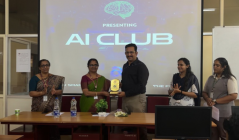
- AI Club Inauguration
- AIML Dept conducts interactive session for High School students on AI & ML
- Top performers of Vidya shine with an impressive SGPA of 9 and above in the S3 examinations
- Top performers of Vidya achieve SGPA 9 and above in S5 examination
- Vidya’s top performers shone brightly by securing an impressive SGPA of 9 and above in the S1 examinations
- Placements for the 2022-26 batch students at Litmus7
- NSS Volunteer wins second prize in Mimicry at State NSS Kalolsavam
- Vidya students emerged as winners at Mini Marathon for Anti-Drug Awareness Campaign
- AIML faculty members and students present paper at EAI International Conference on Big Data Innovation for Sustainable Cognitive Computing (EAI BDCC 2025)
- Awareness session on Master on Common Admission Test (CAT)
- AIML Faculty members attend ATAL FDP
- Awareness session on Graduate Aptitude Test in Engineering (GATE)
- AIML students successfully complete NPTEL courses
- AIML faculty members and students present paper at the EAI International Conference on Big Data Innovation for Sustainable Cognitive Computing (EAI BDCC 2025)
- AIML faculty members successfully completes AICTE-ATAL FDP on Energy-Efficient LLM Model Deployment on Edge and Cloud
- Vidya students appointed to Key Leadership Roles in STRIDE Community Team 2026
- AIML student achieves selection in Infosys Springboard Internship 6.0 (Virtual)
- AIML Faculty member presents paper at ICAIES 2025
- Placements for the 2026 graduating batch students at Sutherland
- FDP on Transformative Artificial Intelligence: From Deep Learning to Agentic Intelligence
- AIML students make mark at 24-hour National Hackathon ‘YODHA’
- Infosys Springboard Virtual Internship Season 6 (Academic Year 2025-26)
- AIML faculty member participates FDP on “Bridging Theory and Practice in Foundations of Computing”
- AIML faculty member serves as reviewer for International Conference on Emerging Trends in Signal Processing and Computational Intelligence (ICSPCI-2025)
- Placements for final year students at UST (2022-26 batch)
- AIML faculty members complete Virtual APEX Faculty Development Program on Cybersecurity
- AIML faculty member participates in two Faculty Development Programmes
- AIML Dept organizes Industry Interaction and Expert Talk
- Industry Interaction and Expert Talk by AIML Dept
- AIML Dept conducts one-day workshop titled “Crafting Intelligent Prompts” for school students
- Christmas 2025 comes alive at Vidya with a burst of joy, togetherness and festive cheer
- AIML and CSE Dept jointly conduct TECHTIDE ’25 – Hackathon
- AIML faculty members complete AICTE ATAL Academy Faculty Development Program
- AIML HoD participates one-week National Level Faculty Development Program
- AIML Dept marked a strong presence at PICC’25 with remarkable contributions through faculty paper presentation
- Publication of AIML Dept Technical Magazine – MANEESHA
- Outstanding NPTEL accomplishments by AIML Students
- Placements for the 2022-26 batch students at Infosys
- AIML Dept conducts Industrial Interaction Session
- Impressive NPTEL success for AIML faculty member and students
- AIML faculty member successfully completes two AICTE-ATAL FDPs on Academic Excellence and Next-Gen Semiconductor Technologies
- AIML students clear NPTEL Examination
- AIML faculty member completes one week National Level Faculty Development Program
- AIML faculty member completes APEX FDP on Artificial Intelligence (AI)
- AIML Dept and VRC organize session on “Technical Presentation: A Guide for Students”
- AIML HoD chairs a session at the International Conference on Power, Instrumentation, Control and Computing (PICC 2025)
- AIML faculty member participates in AICTE ATAL Academy FDP
- AIML faculty member secures top 5% rank in NPTEL course “Python for Data Science”
- Vibrant performances and activities mark AIML Association Day 2025
- AIML Faculty Members earn Elite recognition in NPTEL Programme
- Internship completed at Inker Robotic Solutions Pvt. Ltd by AIML Students AIML faculty member serves as resource person for ‘AI Talk : Machine Thought’”
- AIML faculty member serves as resource person for ‘AI Talk : Machine Thought’”
- AIML HoD completes AICTE-ATAL FDP on Advances in AI and Ethical Dimensions in Intelligent Systems
- AIML Dept excels at International Conference on Smart Technologies with collaborative Faculty–Student paper presentation
- VYVIDH 2025 – Vidya’s Techno-Cultural Fest, paves the way for innovation, encourages bold dreams, and empowers students to bring them to life
- AIML Department represents Vidya at International Conference on Smart Technologies
- Paper from AIML Department showcased at International Conference on Smart Technologies
- AIML students successfully complete internship program
- AIML Dept shines at International Conference on Sustainable Development through Multidisciplinary Approaches with Faculty–Student Paper Presentation
- AIML students selected for Infosys Springboard Internship 6.0 (Virtual)
- Vidya came alive with the vibrant spirit of Onam 2025 with a tapestry of talent, culture and festive cheer
- AIML student successfully completes NPTEL course “Advanced Robotics Applications”
- AI ML Dept hosts Alumni Interaction with Ms Varadambika A
- Releasing ceremony of AIML Dept newsletter ‘GAZETTE 2024-25’
- Paper presentation by AIML Dept at International Conference on Smart Technologies: AI, IoT & APPA Development
- Outstanding Toppers among S4 B.Tech Students at KTU
- Welcome aboard, B.Tech (2025-29 Batch)! AICTE-VIDYA Induction Training Programme began with a vibrant array of sessions and initiatives
AY 2024-25
- S6 toppers excel in KTU S6 B Tech result
- Celebrating the spirit of inclusive innovation at STRIDE Summit 2025 with Designathon 2025 Winners, Best Institution and Campus Ambassador Award
- AIML Dept celebrates the faculty-student research publication in the Journal of Research and Review in Quantum Computing
- Career Guidance Session on GATE 2026
- AIML Dept conducts session on “Generative AI and the Future of Creativity”
- AIML faculty member successfully completes FDP / Training Program on ‘Innovative Teaching and Learning Pedagogy’
- IAIML faculty member successfully completes FDP on ‘Practical Aspects of ICT Tools and Online Teaching: Current Scenario’
- nnovation meets Inclusion @ STRIDE Makethon: Vidya Shines with Seven Teams selected for the Grand Stage
- Workshop on “Code the Future: Python and Machine Learning” by AIML Dept
- AIML faculty member successfully completes FDP on ‘Practical Aspects of ICT Tools and Online Teaching: Current Scenario’
- AIML faculty member successfully completes FDP / Training Program on
- ‘Innovative Teaching and Learning Pedagogy’
- AIML faculty member attends six-day online FDP on “Agentic AI and Large Language Models.”
- AIML faculty member successfully completes the FDP on ‘Engineering Entrepreneurship and Intellectual Property Rights (IPR)’
- Winners of the Essay Competition honored as part of Indian Overseas Bank’s Vigilance Awareness Campaign
- Participation in the ISRO–IIRS Online Training on Remote Sensing of Soils by the Dept of AIML
- MoU between Inker Robotics Solutions Private Limited and Vidya Academy Of Science & Technology
- AIML HoD clears NPTEL online certification course ‘Python for Data Science’
- Elevating Excellence : Vidya Toppers in first semester B Tech Examinations (2024-28 Batch)
- AIML faculty member and student present paper at International Conference on Intelligent Techniques in Computer and Engineering Science
- AIML-organizes-alumni-interaction-session
- Vidya students attend Innovation and Entrepreneurship Development (IDE) Bootcamp
- AIML Dept conducts talk on “How to Crack a Job Interview
- Vidya Toppers in Third Semester B Tech Examinations (2023-27 Batch)
- Vidya Toppers in fifth semester B Tech Examinations (2022-26 Batch)
- UNITE: Unveiling the remarkable journey of AIML Department Association
- AIML HoD attends FDP on ‘Algorithmic thinking with Python
- AIML Dept conducts FDP on DEEP DIVE into DEEP LEARNING
- AIML faculty member showcases newest quality of information with an insightful technical session
- AIML faculty participates National Level FDP
- Vidya top performers in KTU S4 B Tech results
- AIML Dept conducts session on ‘Prompt Engineering'
- AIML faculty members serve as resource persons for the AI seminar on ‘Exploring Prompt Engineering
- AIML Faculty Members attend Five-Day FDP on “Artificial Intelligence and Robotics”
- AI ML Dept organizes Value Added Course on ‘Machine Learning Tools in Python
- AI ML Dept organizes Value Added Course on ‘Python Programming : An Industrial Perspective’
- AIML Dept observes Environment Day with Green Tech Idea Hackathon for a sustainable future
AY 2023-24
- AIML faculty member presents paper in the National Conference on Recent Innovations in Computer and Information Technology (RICIT 24)
- AIML faculty member presents paper in the National Conference on Recent Innovations in Computer and Information Technology (RICIT 24)
- Parent Teacher (PT) Meeting
- AIML Dept hosts Achievers’ Day 2023-24
- AIML S4 students witness the boundless possibilities of AI Engineering with valuable insights during their Industrial Visit
- Learning Japanese language – An awareness talk
- Vidya Top perfomers in Third Semester B Tech Examinations
- Vice Principal attends 5 days FDP on “Outcome Based Education and Application of Generative AI in Teaching and Research”
- Vice Principal attends 5 days FDP on “Outcome Based Education and Application of Generative AI in Teaching and Research”Vice Principal and AIML Faculty member present research paper in the fourth National Conference on Recent Innovations in Computer and Information Technology (RICIT 24)
- AIML conducts Three-Day Online Faculty Development Program on Theoretical Foundations and Research Applications in Machine Learning and Deep Learning
- Vidya signs MoU with Cherpu Block Panchayath
- AIML Dept conducts workshop on “Machine Learning Using Python” for diploma students
- AIML Dept conducts value added course on ‘Programming Fundamentals Plus: Building Strong Foundations’
- AIML Dept conducts Industry Interaction with TCS : Technical Session on “AI : Trends and Predictions”
AY 2022-23
-
AIML Dept bids Farewell to Ms Aparna S Balan – Embarking on a New Academic Journey
- AIML students mesmerize the audience with an array of activities during Dept Association Day 2023
-
Onam celebration 2023 with the most grandiose manner with much zeal and panache
-
AI ML Dept conducts add-on course on Programming Fundamentals Plus: Building Strong Foundations
-
Vidya Top performers in first Semester B Tech ( 2022-26 Batch) Examinations
- AI ML conducts webinar on ‘AI and Machine Learning Mastery: Pioneering Careers in the Future’
-
Webinar “ChatGPT: Revolutionizing Conversational AI – Applications, Opportunities and Challenges”
-
Motivational and career talk on “How AI & ML will impact the future of career and daily life”
-
A talk on “Career opportunities in Artificial Intelligence & Machine Learning"
Faculty Info
Syllabus
- KTU 2024 Syllabus
- KTU 2019 Syllabus
INFRASTRUCTURE
LIBRARY
Nearly 100 books related to various disciplines are available. Both staff and students can hire books from here.
DATA SCIENCE / MACHINE LEARNING LAB
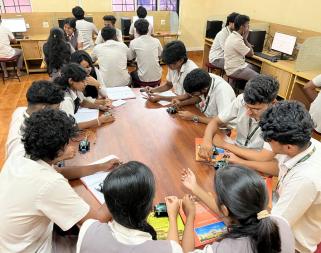
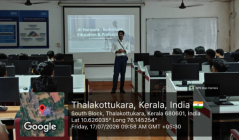
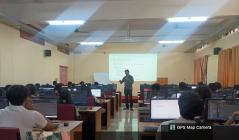
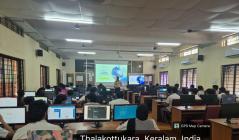
The Data Science and Machine Learning Laboratory is designed to provide students with hands-on experience in Data Science, Machine Learning, Artificial Intelligence, and programming. The laboratory consists of 72 high-performance computer systems equipped with modern software, development tools, and high-speed internet to support practical learning, research, and project development.
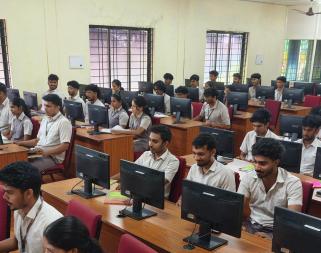
Key Features:
- 72 High-performance computer systems
- Windows and Ubuntu operating systems
- LCD Projector
- High-speed Wi-Fi and LAN connectivity
- Whiteboard and presentation facilities
INTERNET OF THINGS (IoT) LAB
The Internet of Things (IoT) Laboratory provides students with practical exposure to the design and implementation of IoT-based systems using *ARIES VEGA development boards*. Through hands-on experiments, students learn to interface sensors, LEDs, buzzers, switches, and other peripheral devices, develop basic programming skills using Python and embedded programming, and understand Linux commands and device communication. The laboratory enables students to acquire, process, and transmit sensor data for monitoring and control applications while introducing concepts such as automation, networking, and cloud connectivity. Overall, the IoT Laboratory bridges theoretical concepts with real-world applications and equips students with the skills required to develop intelligent systems for smart homes, healthcare, industrial automation, environmental monitoring, and smart city solutions.
PLACED STUDENTS LIST
MAGAZINE
CONTACT US
Email :-aimlhod@vidyaacademy.ac.in
Phone :- 04885287751 / 04885287752 Ext : 176
Achievements
-
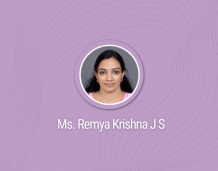 AIML faculty attends Faculty Industry Connect ProgramVidya faculty members strengthen Industry–Academia collaboration by providing faculty members with first-hand exposure to current industry...
 -
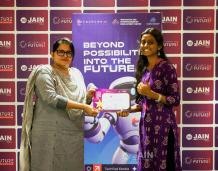 FIRST PRIZE ON TECHON 26 Campus Ambassador CompetitionFIRST PRIZE - All Kerala Level Heartiest congratulations to Meera Surendran on this outstanding achievement Congratulations & Best...
 -
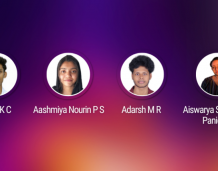 AIML students earn NPTEL CertificationAaron K C (S4, AIML Dept), Aashmiya Nourin P S (S4, AIML Dept), Adarsh M R (S4, AIML Dept), Aiswarya Sivakumar Panicker (S4, AIML Dept)...
 -
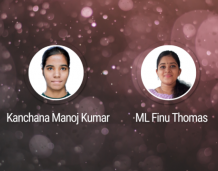 NPTEL Certification Milestone by AIML studentsThe Department of Artificial Intelligence and Machine Learning (AIML) is committed to empowering students with advanced technical expertise...
 -
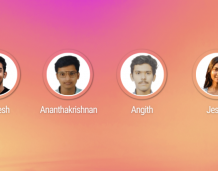 AIML Students Earn NPTEL Certification in PythonIt is with great pride that the Department of AIML announces the successful completion of the NPTEL online certification course “Python for...
 -
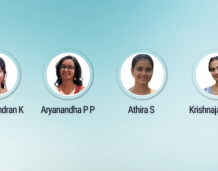 AIML Students Earn NPTEL CertificationIt is with great pride that the Department of AIML shares the successful completion of the NPTEL online certification course...
 -
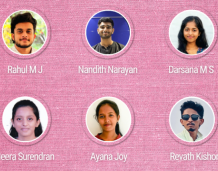 Top Ranks in Healthcare Digital Innovation Contest 2026Meera Surendran and Nandhith Narayan have showcased excellence in Artificial Intelligence & Machine Learning through their technical...
 -
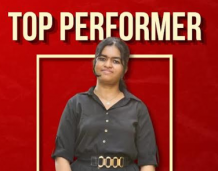 ???? Top Performer – AI & ML InternshipCongratulations to Swetha S Warrier (S5 AIML) for being recognized as the Top Performer in the Internship Programme on AI & ML using Python...
 -
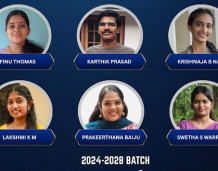 Infosys Virtual Internship 6.0 – Certified StudentsHeartiest congratulations to the 2024–2028 batch students for successfully completing the Infosys Virtual Internship 6.0. Your dedication,...
 -
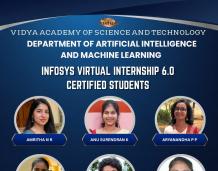 Infosys Virtual Internship 6.0 – Certified StudentsCongratulations to the talented students of the 2024–2028 batch for successfully completing the Infosys Virtual Internship 6.0. Your...
 -
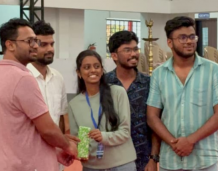 AIML students make mark at 24-hour National HackathonAIML students make mark at 24-hour National Hackathon YODHA
 -
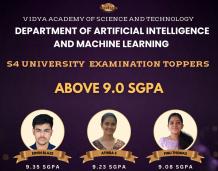 AIML Students Shine in KTU S4 University ExaminationThe Department of Artificial Intelligence and Machine Learning (AIML), Vidya Academy of Science & Technology, proudly congratulates the...
 -
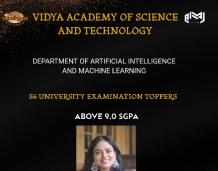 9+ SGPA in S6 University ExaminationsThe Department of Artificial Intelligence and Machine Learning (AIML), Vidya Academy of Science & Technology, proudly congratulates Sanmaya...
 -
 Google Gemini Campus Ambassador recognitionVidya student achieves prestigious Google Gemini Campus Ambassador recognition
 -
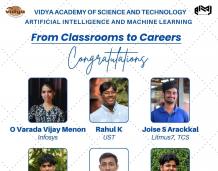 Placed studentsFrom Classrooms to Careers! The Department of Artificial Intelligence & Machine Learning at Vidya Academy of Science and Technology...
WHAT'S NEW
Information
Address
Vidya Academy of Science & Technology
Thalakottukara P.O., Kecheri, Thrissur - 680501, Kerala, India
Phone: +91 4885 287751, 287752
Fax: +91 4885 288366
E-Mail: principal@vidyaacademy.ac.in
VICT | Vidya Kilimanoor | IT Division
locate us

Affiliated to APJ Abdul Kalam Technological University & Approved by AICTE | ISO 9001 : 2015
Copyright © 2025, www.vidyaacademy.ac.in. All Rights Reserved.